
Flooring Installation in Raleigh and the Triangle
Luxury vinyl plank, engineered hardwood, laminate and tile installed over a subfloor that has been checked for flatness and moisture first.
A floor only looks as good as what is underneath it. LVP laid over a subfloor that is out of flat telegraphs every dip and hump. Engineered hardwood set over a slab that has not been tested for moisture can cup or gap within a season, regardless of the finish on the boards themselves.
RK Renovation tests subfloor moisture before it recommends which product goes down, checks flatness the same way a tile setter would, and lets material acclimate to the room for the manufacturer specified window before installation starts. Expansion gaps at the perimeter and clean transitions between rooms and level changes are planned before the first plank is cut, not improvised at the doorway.
LVP through a whole main floor, engineered hardwood in a primary suite, or tile in a mudroom that connects to it, you get one crew, a written scope and a firm number before material is ordered, whether the job runs three days or two weeks.
You probably need this if
- Boards or planks are cupping, gapping or peaking at the seams
- The floor feels soft, springy or uneven when you walk across it
- There is a musty smell near the floor that airing out the room does not fix
- The transition between two rooms is an abrupt step rather than a flush line
- The current flooring is more than fifteen years old and showing wear through the finish
Free Estimate
Tell us about the project and we will get you a written number for flooring installation.
What the Written
Price Covers
No line item appears halfway through the job that was not on the quote you signed.
Subfloor moisture and flatness testing
A calcium chloride or relative humidity reading on slab, and a straightedge check on wood subfloor, before any product is recommended or ordered.
Removal and haul away of old flooring
Carpet, pad, sheet vinyl or old tile pulled and hauled the same day, with the subfloor underneath inspected rather than covered back up.
Subfloor correction
Self leveling underlayment, plywood overlay or spot repairs to rotten or springy sections, corrected before new material goes down rather than telegraphed through it.
Acclimation and installation
Material staged in the home for the manufacturer required window, then installed with proper expansion gaps and a fastening or adhesive method matched to the product.
Transitions and trim
Reducers, T molding and thresholds set at doorways and level changes, base shoe reinstalled or replaced to hide the expansion gap cleanly.
Final clean and walk through
Floors cleaned of dust and adhesive residue, then a punch walk where you list anything you want checked again before we call the job finished.
Choices worth making early
LVP versus engineered hardwood
Luxury vinyl plank shrugs off water and pet claws and costs less to install. Engineered hardwood reads as real wood because it is, refinishes once lightly, and holds resale value in a way vinyl does not.
Nail down, glue down or floating installation
Nail down suits a wood subfloor and solid product. Glue down adds stability over a slab. Floating installation goes fastest and forgives a slightly less perfect substrate, at some cost to the solid underfoot feel.
Subfloor correction method
Self leveling underlayment fixes gradual low spots across a slab. A plywood overlay fixes a wood subfloor with more significant unevenness or bounce, at the cost of a small amount of ceiling height.
Transition strategy between rooms
A flush reducer keeps sightlines clean between two similar height floors. A change in level at a doorway needs a threshold sized to the actual gap, planned before either floor goes in rather than patched afterward.
How the work runs
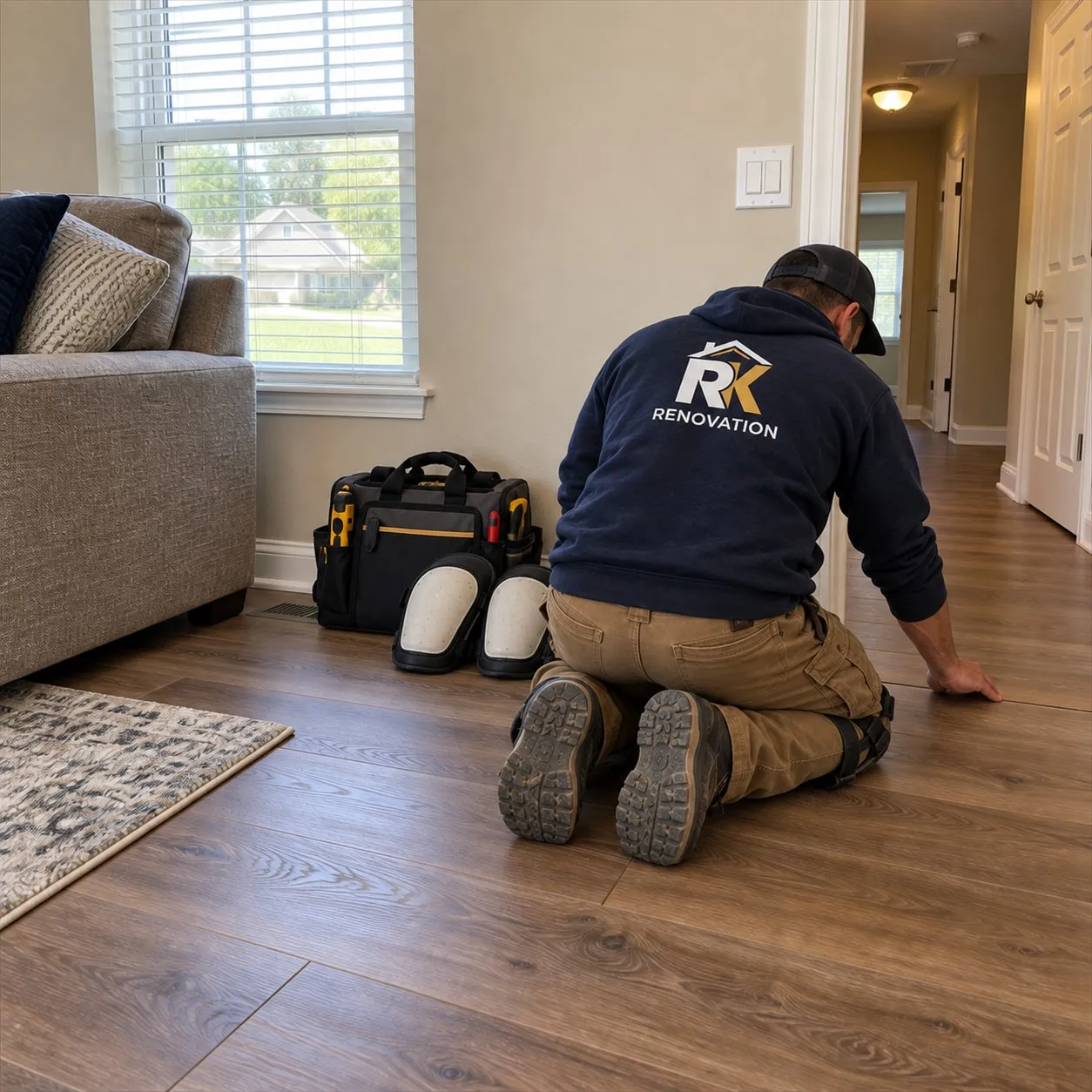
Four stages, each one finished before the next starts. Typical duration is 3 days to 2 weeks.
Test and measure
We test subfloor moisture, check flatness, and measure the space, then talk through which product actually fits the room, the traffic and the budget.
Selections and acclimation
Material is ordered and, where the manufacturer requires it, staged in the home to acclimate to temperature and humidity before installation begins.
Subfloor prep and install
Low spots leveled, damaged sections replaced, then flooring installed with correct expansion gaps and a fastening method matched to that specific product.
Transitions and finish
Transitions, base shoe and trim go in last, followed by a final clean and a walk through where you sign off on the work.
Why homeowners pick RK for this
Three bids for flooring installation will look similar on paper. What separates them is what happens on the days nobody photographs.
Get Your NumberWe test before we recommend a product
Moisture and flatness readings happen before we tell you what floor to buy, not after it is already on your porch. A slab reading too wet for engineered hardwood changes the conversation early, when it is cheap to change, rather than after the first plank cups.
Acclimation is not skipped to save a day
Flooring moves with the humidity of the room it sits in. We stage material for the window the manufacturer specifies, even when that means telling you the schedule needs one more day than you hoped for.
One crew, one schedule
The same people test the subfloor, correct it and install the finished floor. Nothing waits on a separate leveling sub who shows up on a schedule of their own.
How we actually do it
Before any flooring product gets recommended, we test what it is going down onto. On a slab, that means a calcium chloride test or an in situ relative humidity reading rather than guessing from how the concrete looks or feels. On a wood subfloor in Raleigh, it means a straightedge across the room checking for humps and dips, since most flooring manufacturers specify a tolerance around three sixteenths of an inch over ten feet. Skipping this step is how a homeowner ends up with LVP that shows every seam because the subfloor telegraphs through it, or engineered hardwood that cups within months because the moisture reading nobody took would have flagged the problem. We test first in every Wake County home, then talk through which product actually fits the reading.
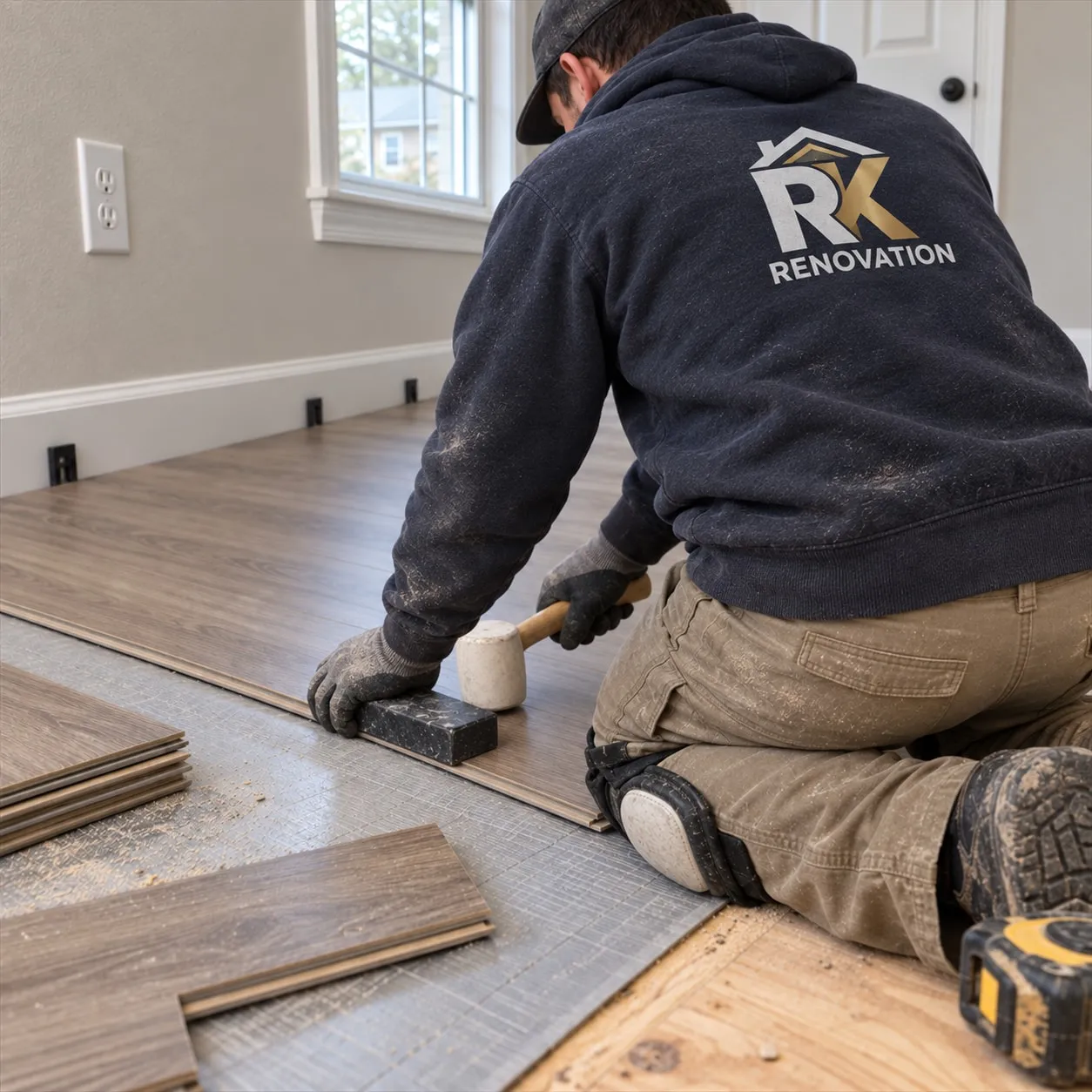
Flooring is not inert once it leaves the box. Engineered hardwood and LVP expand and contract with the humidity of the room they sit in, which is why manufacturers specify an acclimation period, commonly three to five days for engineered wood, before a single plank gets cut. We stage material in the actual room in Raleigh, not a garage or a truck, so it adjusts to the conditions it will live in. Installation then leaves an expansion gap at the perimeter, usually a quarter to a half inch depending on the product, hidden under base shoe rather than caulked shut. Transitions between rooms are planned at the same stage, since a floor with no room to move will buckle at the first seasonal swing.
Where a house sits changes what its floor is fighting. Most post 1990 subdivisions around Raleigh, including the bulk of Cary, Apex and Holly Springs, are built on slab, and a slab poured against Carolina clay can carry moisture upward for years after the concrete looks fully cured, which is exactly what a calcium chloride test catches before flooring goes down. Older Wake County houses on a crawl space carry a different risk: humid summer air condensing on cooler floor joists and subfloor sheathing, which shows up as cupped boards or a musty smell long after the original installation. A vapor barrier and, in bad cases, mechanical ventilation in the crawl space often has to be corrected before new flooring goes down rather than after it starts failing.
Straight answer on price
Most flooring installation projects we quote land between $3,200 and $24,000. We measure on site, then put a fixed number in writing.
Call (919) 335-7730Answered before you ask
How long does a flooring installation take?
A single room usually finishes in three to five days including acclimation time. A full main floor of LVP or engineered hardwood typically runs one to two weeks, depending on square footage and how much subfloor correction the house needs before installation starts.
What does flooring installation cost in the Triangle?
Most flooring jobs we run land between 3,200 and 24,000 dollars. A single room of LVP sits at the low end. A full main floor of engineered hardwood with subfloor correction and custom transitions sits at the top. You get a fixed written number before material is ordered.
Do I need to test for moisture before choosing a floor?
Yes, especially on a slab. Post 1990 Triangle subdivisions are almost entirely slab construction, and a slab that reads too wet for engineered hardwood can still be fine for LVP. We test before we recommend a product rather than after.
Can you install flooring over my existing floor?
Sometimes, if the existing surface is flat, sound and the right thickness to allow it. More often we remove the old material first, because it is the only way to actually see and correct the subfloor underneath.
How long does material need to acclimate before installation?
It depends on the product. Engineered hardwood commonly needs three to five days staged in the room at normal living conditions. LVP needs less, sometimes 48 hours. We follow the manufacturer requirement for whatever you choose rather than a single blanket number.
What homeowners say
Pulled straight from our Google Business Profile, and updated as new reviews come in.
Flooring Installation near you
Pick your town for local detail: what the housing stock is made of, which office issues the permit, and what we run into most often there.
All service areasOther work we take on
Most projects touch more than one trade. Keeping them under one crew is what keeps the schedule honest.
Bathroom Remodeling
Walk-in showers, custom tile, vanities and full layout changes, waterproofed to last decades.
ExploreKitchen Remodeling
Cabinetry, stone countertops, backsplash and lighting designed around how you actually cook.
ExploreTile Installation
Porcelain, marble, mosaic and large format. Dead-level substrates and razor-straight grout lines.
ExploreInterior and Exterior Painting
Real prep work, premium coatings, crisp cut lines. Walls, trim, cabinets and full exteriors.
ExploreDrywall Installation and Repair
Invisible patches, ceiling repairs, full hangs and Level 5 finishes ready for the roller.
ExploreDoor and Window Installation
Entry doors, sliders, interior doors and replacement windows. Square, sealed and energy tight.
ExploreReady to replace your floors?
Free estimates, honest pricing, and a crew that shows up when it says it will.