
Tile Installation in Raleigh and the Triangle
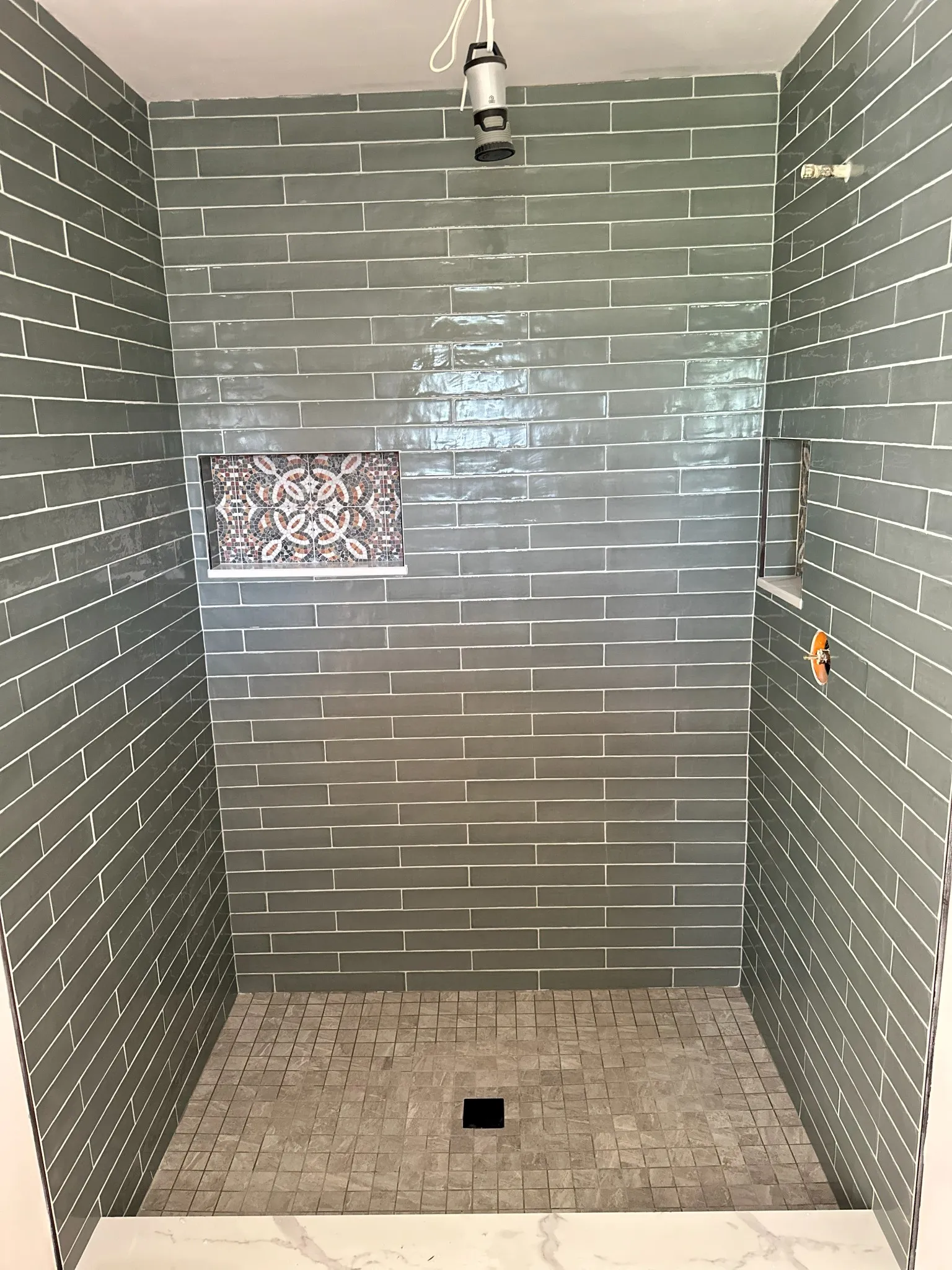
Showers, floors, backsplashes and fireplace surrounds set over substrates that are flattened and waterproofed before a single tile goes down.
Tile is only as flat as the surface underneath it, and that is where most tile jobs go wrong before a single piece is set. A subfloor or wall that is out of flat by more than an eighth of an inch over ten feet will show up as lippage between tiles, no matter how careful the setter is with the trowel.
RK Renovation checks substrate flatness before ordering material, corrects it with self leveler or backer board rather than hoping thinset will fill the gap, and sets large format tile with enough thinset coverage that a tile does not ring hollow when you knock on it. Movement joints go in at the perimeter and through every long continuous run, not as an afterthought once the grout is already curing.
Showers, floors, backsplashes and fireplace surrounds, or a full house of porcelain plank, you get one crew, a written scope and a firm number before the first box gets opened, whether the job runs three days or two weeks.
You probably need this if
- Grout lines are cracking, crumbling or falling out
- Tile sounds hollow or drums when you tap it
- You can feel a lip or edge between two adjacent tiles
- The shower floor has never quite dried between uses
- The existing tile does not match anything currently in production
Free Estimate
Tell us about the project and we will get you a written number for tile installation.
What the Written
Price Covers
No line item appears halfway through the job that was not on the quote you signed.
Substrate assessment and prep
Floors and walls checked with a straightedge and level, not by eye, and corrected with self leveling underlayment or backer board before layout even begins.
Uncoupling and waterproofing membranes
Where movement or moisture calls for it, an uncoupling membrane or bonded waterproofing goes down first, isolating the tile from a substrate that expands, contracts or gets wet.
Layout and dry fit
A full pattern dry fit happens before anything is set in thinset, so cuts land at the edges and away from the sightline you actually see when you walk into the room.
Setting and thinset coverage
Large and small format tile set with back buttering where the format calls for it, checked for full coverage rather than the perimeter ring most callbacks trace back to.
Grout, caulk and movement joints
Grout matched to joint width, caulk at every change of plane, and soft movement joints placed at the perimeter and through large continuous runs.
Sealing and final clean
Natural stone sealed before grout and again after, all haze cleaned off the face, and a punch walk where you list anything you want checked again.
Choices worth making early
Tile format
Large format porcelain reads calm with less grout to clean, but it demands a flatter substrate and more setting skill to avoid lippage. Small format and mosaic forgive more substrate movement and add grip underfoot in a wet floor.
Natural stone versus porcelain
Marble, travertine and slate bring a texture porcelain cannot fully copy, but they need sealing on a schedule and are softer against a dropped bottle. Porcelain costs less to maintain over the years it sits on your floor.
Grout choice
Cement based grout is cheaper and comes in the widest color range. Epoxy grout resists stains and does not need sealing, which matters most in a shower floor or a busy kitchen backsplash.
Pattern and layout
Straight lay reads modern and is fastest to set. Herringbone and offset patterns add real labor hours for the cutting alone, and both need a straighter substrate than a basic grid pattern tolerates.
How the work runs
Four stages, each one finished before the next starts. Typical duration is 3 days to 2 weeks.
Measure and layout plan
We check the substrate for flatness and moisture, measure the room, and plan the layout around focal points so partial cuts fall where they are least visible.
Substrate correction
Self leveler, backer board or an uncoupling membrane goes down first, because a flat, stable base is what keeps tile from cracking or drumming hollow later.
Setting
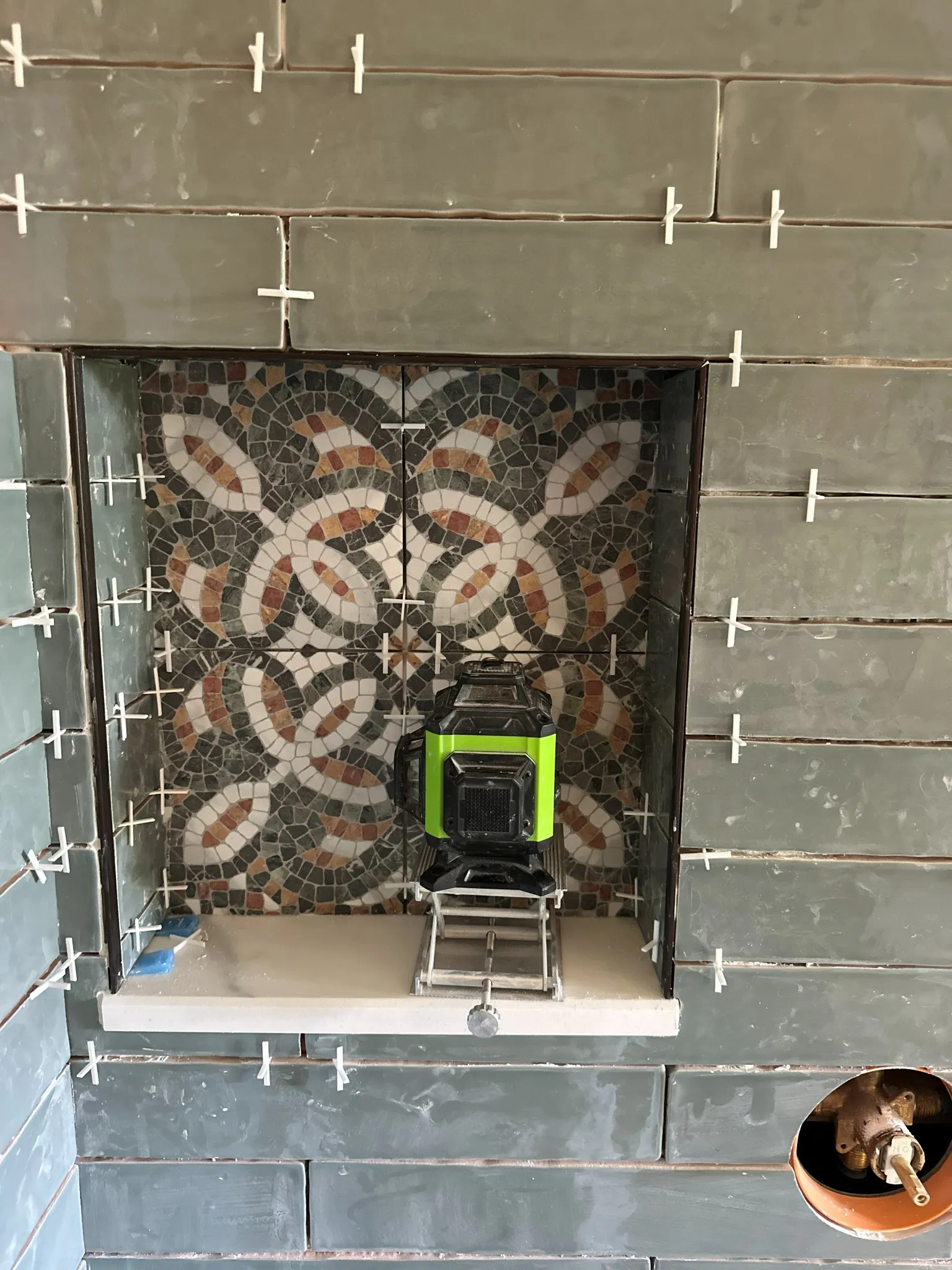
Tile is set with full thinset coverage and consistent spacing, checked for lippage tile by tile rather than at the end of the day.
Grout and seal
Grout, caulk and sealing follow once the thinset has cured, then a final clean and a walk through where you sign off on the work.
Why homeowners pick RK for this
Three bids for tile installation will look similar on paper. What separates them is what happens on the days nobody photographs.
Get Your NumberWe check flatness before we quote
A straightedge and a level go over the substrate at the estimate, not after material is already on order, so the correction cost is in the number you sign rather than a change order mid job.
Full thinset coverage, not a perimeter ring
Large format tile gets back buttered and combed so it is supported across its whole face. A tile that only touches thinset at the edges cracks under a dropped pan or a rolling chair.
One crew, one schedule
The same people prep the substrate, set the tile and grout it. Nothing waits days for a grout sub to show up after the setter has already moved to the next job.
How we actually do it
Tile Council of North America guidance calls for a floor flat within a quarter inch over ten feet for most tile, and large format porcelain wants closer to an eighth of an inch. Most subfloors in Raleigh do not arrive at that tolerance, especially over a plywood deck that has seen a few Carolina humidity swings. We check flatness with a straightedge at the estimate, not after material is on order, and correct low spots with self leveling underlayment rather than floating them out with extra thinset, which creates a soft, uneven bed that cracks later. Where the substrate is wood rather than concrete, an uncoupling membrane goes down first in Wake County jobs so seasonal movement does not telegraph into the tile and grout lines above it.
Large format tile, anything over fifteen inches on a side, shows every flaw in a substrate that small mosaic would hide. Lippage, where one tile edge sits proud of its neighbor, happens when the setter cannot fully seat a rigid piece into an uneven bed. We back butter every large format tile and comb the floor, then check coverage by pulling a sample piece before the rest of the run goes down, aiming for at least 80 percent thinset contact in dry areas and closer to full coverage in a wet shower floor. In Raleigh kitchens, where a dropped cast iron pan is a real event, that coverage is what keeps a tile from cracking under a point load a year after it looked perfect on install day.
Tile is rigid and the building underneath it is not, which is why movement joints matter more than most homeowners expect. We place soft joints, typically a matching color caulk rather than grout, at the perimeter of every room, at inside corners, and through the field every twenty to twenty five feet on a continuous run, matching industry standard spacing. Natural stone in Raleigh bathrooms gets sealed before grouting to keep grout haze from staining the stone, and again after the grout cures for a lasting barrier against oil and hard water spotting. Grout choice matters too: cement based grout is cheaper and comes in more colors, while epoxy grout resists stains and never needs resealing, worth the added cost in a Wake County shower floor that sees water daily.
Straight answer on price
Most tile installation projects we quote land between $2,200 and $16,000. We measure on site, then put a fixed number in writing.
Call (919) 335-7730Answered before you ask
How long does a tile installation take?
A shower or a small backsplash usually finishes in three to five days. A full kitchen floor or a house of porcelain plank runs one to two weeks, depending on square footage and how much substrate correction the room needs before setting even starts.
What does tile installation cost in the Triangle?
Most tile jobs we run land between 2,200 and 16,000 dollars. A bathroom floor or a kitchen backsplash sits at the low end. A large format porcelain floor through a main living area or a full house of natural stone sits at the top. You get a fixed written number before material is ordered.
Do you tile over existing tile?
Rarely. Tiling over tile adds height that throws off door swings and transitions, and it hides whatever is wrong with the substrate underneath. We remove the old tile, check what is under it, and correct that surface before anything new goes down.
Can you match tile I already have?
Sometimes, if the manufacturer still runs the line and dye lot variation is not too wide. Discontinued tile is common enough that we tell you honestly at the estimate whether an exact match is realistic or whether a close complement is the better plan.
Do I need to leave the room during the work?
Not usually for a backsplash or a small floor, though dust containment goes up regardless. A full bathroom or a wet area needs the water shut off for that space, which we schedule with you rather than surprising you at 8am.
What homeowners say
Pulled straight from our Google Business Profile, and updated as new reviews come in.
Tile Installation near you
Pick your town for local detail: what the housing stock is made of, which office issues the permit, and what we run into most often there.
All service areasOther work we take on
Most projects touch more than one trade. Keeping them under one crew is what keeps the schedule honest.
Bathroom Remodeling
Walk-in showers, custom tile, vanities and full layout changes, waterproofed to last decades.
ExploreKitchen Remodeling
Cabinetry, stone countertops, backsplash and lighting designed around how you actually cook.
ExploreFlooring Installation
LVP, engineered hardwood, laminate and tile, over subfloors flattened so seams disappear underfoot.
ExploreInterior and Exterior Painting
Real prep work, premium coatings, crisp cut lines. Walls, trim, cabinets and full exteriors.
ExploreDrywall Installation and Repair
Invisible patches, ceiling repairs, full hangs and Level 5 finishes ready for the roller.
ExploreDoor and Window Installation
Entry doors, sliders, interior doors and replacement windows. Square, sealed and energy tight.
ExploreReady to get your tile installed?
Free estimates, honest pricing, and a crew that shows up when it says it will.