
Tile Installation in Chapel Hill, NC
Licensed and insured, about 40 minutes from our base, with a fixed written price before any work starts.
Showers, floors, backsplashes and fireplace surrounds set over substrates that are flattened and waterproofed before a single tile goes down.
In Chapel Hill you are usually dealing with mid century houses that deserve a renovation in their own idiom, which changes how the work has to be sequenced. Most of Chapel Hill sits in Orange County, though the eastern edge crosses into Durham County, which changes which office your permit goes through.
What the price covers
- Setting and thinset coverage. Large and small format tile set with back buttering where the format calls for it, checked for full coverage rather than the perimeter ring most callbacks trace back to.
- Grout, caulk and movement joints. Grout matched to joint width, caulk at every change of plane, and soft movement joints placed at the perimeter and through large continuous runs.
- Sealing and final clean. Natural stone sealed before grout and again after, all haze cleaned off the face, and a punch walk where you list anything you want checked again.
Tile Installation in Chapel Hill, in practice
Tile Council of North America guidance calls for a floor flat within a quarter inch over ten feet for most tile, and large format porcelain wants closer to an eighth of an inch. Most subfloors in Chapel Hill do not arrive at that tolerance, especially over a plywood deck that has seen a few Carolina humidity swings. We check flatness with a straightedge at the estimate, not after material is on order, and correct low spots with self leveling underlayment rather than floating them out with extra thinset, which creates a soft, uneven bed that cracks later. Where the substrate is wood rather than concrete, an uncoupling membrane goes down first in Orange County jobs so seasonal movement does not telegraph into the tile and grout lines above it.
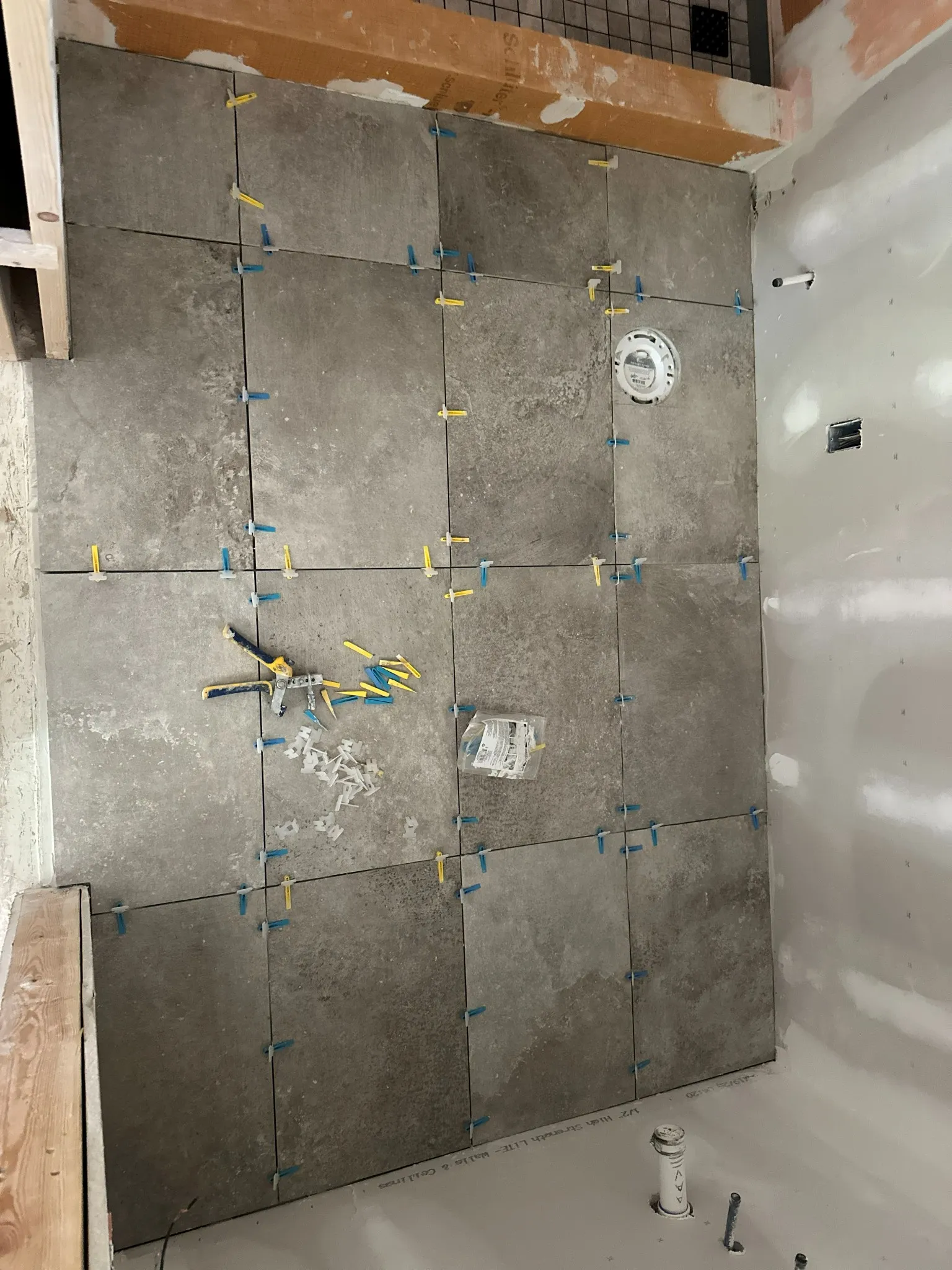
Large format tile, anything over fifteen inches on a side, shows every flaw in a substrate that small mosaic would hide. Lippage, where one tile edge sits proud of its neighbor, happens when the setter cannot fully seat a rigid piece into an uneven bed. We back butter every large format tile and comb the floor, then check coverage by pulling a sample piece before the rest of the run goes down, aiming for at least 80 percent thinset contact in dry areas and closer to full coverage in a wet shower floor. In Chapel Hill kitchens, where a dropped cast iron pan is a real event, that coverage is what keeps a tile from cracking under a point load a year after it looked perfect on install day.
Free Estimate
Chapel Hill homeowners: tell us about the project and we will put a number in writing.
What Chapel Hill homes need
Chapel Hill has the most interesting mid century stock in the Triangle. Coker Hills and the neighborhoods around campus are full of 1950s to 1970s houses with flat roof sections, exposed beams and original single pane glass, and homeowners here usually want to keep that language rather than erase it.
Permits for structural, plumbing and electrical changes go through the Town of Chapel Hill Building and Development Services. We file them, schedule the inspections and meet the inspector, so the work is on the record when you eventually sell.
We work across Southern Village, Meadowmont, Glen Lennox, Coker Hills and the rest of Chapel Hill, and we are about 40 minutes from our base.
Everything we do in Chapel Hill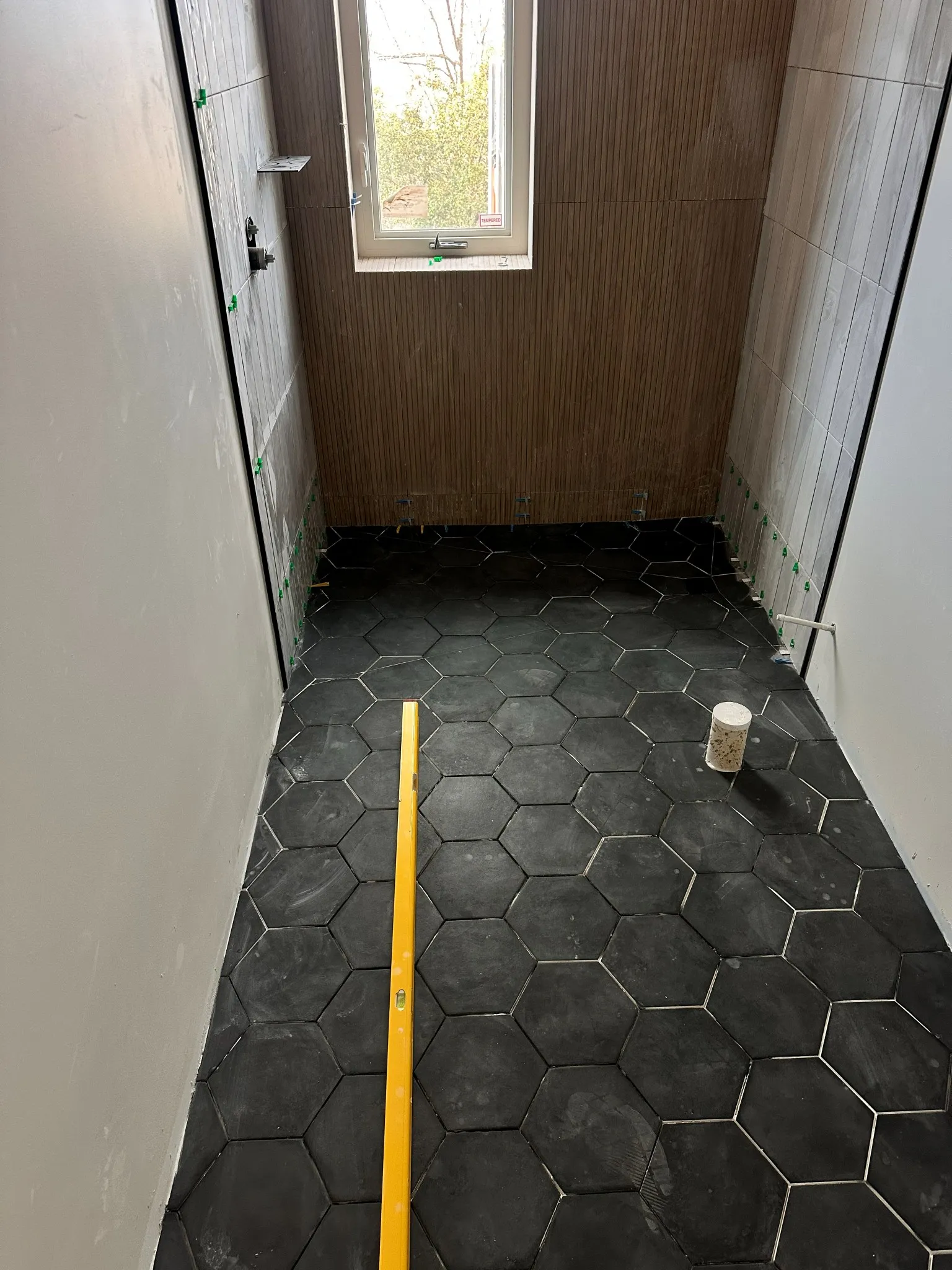
How a Chapel Hill project runs
Four stages, each finished before the next begins. Typical duration is 3 days to 2 weeks.
Measure and layout plan
We check the substrate for flatness and moisture, measure the room, and plan the layout around focal points so partial cuts fall where they are least visible.
Substrate correction
Self leveler, backer board or an uncoupling membrane goes down first, because a flat, stable base is what keeps tile from cracking or drumming hollow later.
Setting
Tile is set with full thinset coverage and consistent spacing, checked for lippage tile by tile rather than at the end of the day.
Grout and seal
Grout, caulk and sealing follow once the thinset has cured, then a final clean and a walk through where you sign off on the work.
Questions from Chapel Hill homeowners
Do you pull a permit for tile work in Chapel Hill?
Most tile jobs do not need a permit since they do not touch structure, plumbing or wiring. If the scope includes moving a drain or a shower valve in Chapel Hill, we handle that filing as part of the job.
How quickly can you start a tile job in Chapel Hill?
We usually estimate within a few days of your call and can often start within one to two weeks, since tile itself typically ships faster than cabinetry or custom glass. Material lead time in Orange County is the main variable, not our schedule.
Do you work with the stone and tile suppliers near Chapel Hill?
Yes. We source from Triangle area distributors and can also work from a specific tile you have already picked out, whether it is in stock locally or needs to be special ordered into Orange County.
Can you match tile I already have?
Sometimes, if the manufacturer still runs the line and dye lot variation is not too wide. Discontinued tile is common enough that we tell you honestly at the estimate whether an exact match is realistic or whether a close complement is the better plan.
What it usually costs
Tile Installation in Chapel Hill generally runs between $2,200 and $16,000, depending on size and finish level. The estimate is free and the number we write down is the number you pay.
Call (919) 335-7730What homeowners say
Pulled straight from our Google Business Profile, and updated as new reviews come in.
Keep looking
The same trade in nearby towns, and the rest of what we do in Chapel Hill.
Tile Installation nearby
Other work in Chapel Hill
Tile Installation in Chapel Hill
Free estimates across Chapel Hill and the wider Triangle, with a fixed written price before any work starts.