
Interior and Exterior Painting in Raleigh and the Triangle
Prep that takes longer than the painting itself, then premium coatings rolled and sprayed to a finish that survives Carolina humidity.
Paint is the last thing anyone notices and the first thing that tells you a house was not maintained. Most of the labor on a real paint job never touches a brush. It is scraping loose material off a soffit, feathering the edge of a chalky sill, filling nail holes, and caulking a joint that has been open long enough to let water behind the trim. Skip that part and the paint looks fine for one summer and fails the next.
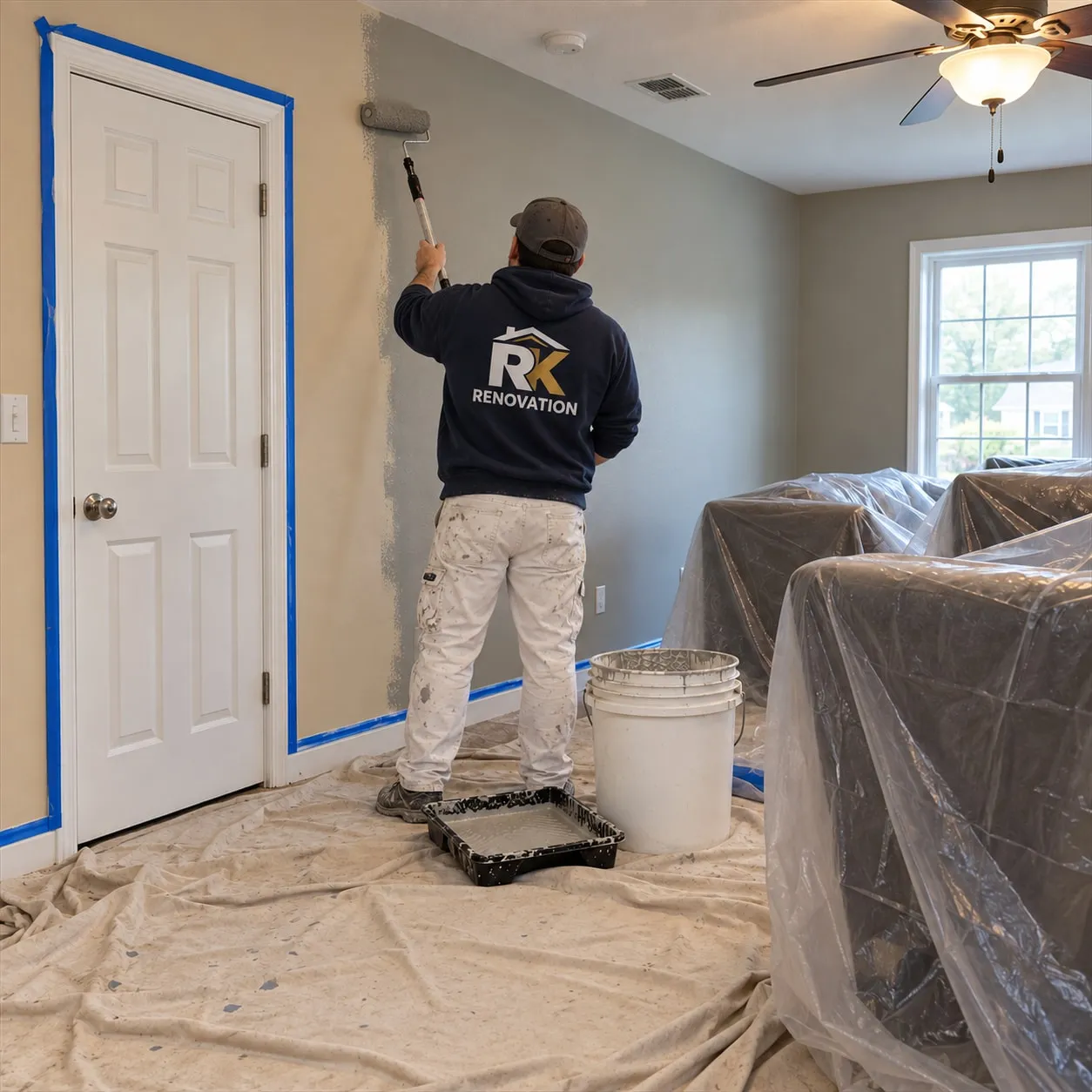
RK Renovation treats prep as the job and the coating as the finish on top of it. We scrape and sand to sound substrate, spot prime bare wood and stain bleed points before anything gets a full coat, and mask floors, fixtures and landscaping like they matter, because they do. On exterior work we watch dew point and humidity rather than just the calendar, since a coating applied too early in the morning or too late in a wet week never cures the way the can promises.
One room with a color change or a full exterior repaint after a failed cedar substrate, you get a written scope, a sheen and color plan, and one crew from the first scrape to the last touch up.
You probably need this if
- Paint is peeling or cracking down to bare wood
- Chalky residue rubs off on your hand when you touch the siding
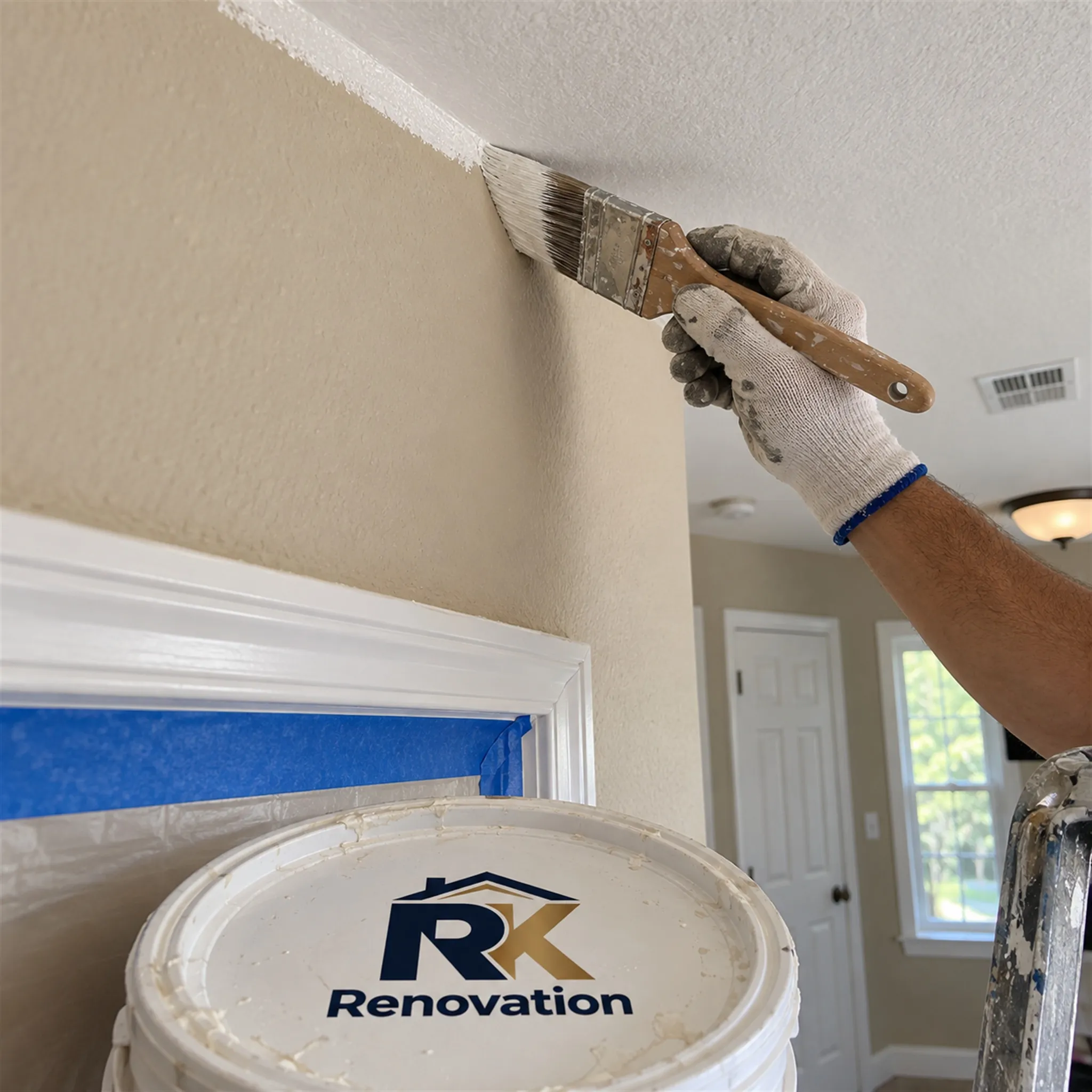
- Caulk lines at trim and windows are cracked, gapped or missing
- Cabinets look dull or slightly sticky no matter how often you clean them
- Interior walls show roller marks or a patchy sheen in raking light
Free Estimate
Tell us about the project and we will get you a written number for interior and exterior painting.
What the Written
Price Covers
No line item appears halfway through the job that was not on the quote you signed.
Surface prep and repair
Scraping loose and peeling paint back to sound material, sanding the edges smooth, filling nail holes and small gouges, and replacing any wood trim that has gone soft.
Caulking and joint sealing
Every open seam at trim, corner boards and window casings gets cut out and recaulked with a paintable, flexible sealant so water stops getting behind the surface, not just on top of it.
Priming and spot priming
Bare wood, patched drywall, and stain or tannin bleed points get the correct primer before color goes on, so the finish coat does not have to hide a problem it was never designed to fix.
Masking and site protection
Floors, counters, fixtures, shrubs and hardscape covered before a can is opened, and hardware pulled rather than taped around, so cut lines stay crisp without paint on anything that should not have it.
Application, sprayed and back rolled
Walls and large exterior fields sprayed for even coverage, then back rolled while wet so the coating works into the surface rather than sitting on top of it, with trim, doors and cabinets cut in by hand.
Cleanup and final walkthrough
Drop cloths and tape come up the same day, hardware goes back on, and we walk the job with you room by room before calling it finished.
Choices worth making early
Sheen by room
Flat hides wall imperfections in a living room or bedroom ceiling. Eggshell and satin wipe clean in hallways and kids rooms. Semi gloss on trim, doors and cabinets sheds handprints and grease.
Cabinet painting
Cabinet boxes and doors get degreased, deglossed or sanded, then a bonding primer before color, because kitchen grime defeats a standard wall primer in a single wash cycle.
Exterior substrate and timing
Cedar siding, fiber cement and old failed paint each behave differently under a sprayer. We plan around dew point, spring pollen and the wet summer stretch rather than fighting the weather to hit a date.
Spray versus brush and roll
Spraying lays down a smoother field on large exterior surfaces and new fiber cement. Brush and roll gives more control on older wood, tight trim and anywhere overspray would be a problem.
How the work runs
Four stages, each one finished before the next starts. Typical duration is 3 days to 2 weeks.
Walk and scope
We look at every surface up close, not from the driveway, checking for chalking, peeling, caulk failure and moisture staining, then write a scope that sets sheens by room and substrate by wall.
Prep, the majority of the labor
Scraping, sanding, patching, caulking and spot priming typically take longer than the painting itself. This is the stage that decides whether the job lasts three years or twelve.
Application by area
Ceilings first, then walls, then trim and doors last, sprayed and back rolled where it makes sense and cut in by brush where precision matters more than speed.
Punch walk and touch up
We walk every room and every elevation with you in good light, mark anything that needs a second look, and correct it before we consider the job finished.
Why homeowners pick RK for this
Three bids for interior and exterior painting will look similar on paper. What separates them is what happens on the days nobody photographs.
Get Your NumberPrep does not get rushed
We do not quote a job assuming two coats will cover a scraping step we skipped. The estimate reflects the actual condition of your substrate, so the schedule we give you is the schedule we keep.
Coatings matched to the surface
Bonding primers on cabinets, stain blocking primers on cedar and knots, masonry coatings on brick and stucco. The right primer under the wrong topcoat still fails, so we treat the pairing as one decision.
One crew, weather timed exterior work
The same painters scope, prep and finish the job, and exterior color coats get scheduled around temperature and humidity windows rather than a calendar date that ignores the forecast.
How we actually do it
Most of what you are paying for in a paint job never shows up as color on the wall. On a typical exterior repaint in Raleigh, scraping loose material, sanding the edges flat, filling gaps and cutting out failed caulk at every trim joint and window casing takes longer than the spraying and rolling combined. Caulk that has shrunk or pulled away lets water behind the siding long before anyone notices peeling, so we recut those joints rather than caulking over the old bead. Bare wood and knots get a stain blocking primer before color, because tannins bleed straight through a standard latex topcoat within a season. Homeowners around Wake County who hire on price alone usually find out later which of these steps got skipped.
Exterior paint fails less often from a bad product than from bad timing. Applying a coat when the dew point sits close to the air temperature traps moisture under the film, and it never fully cures no matter how dry it looks by evening. In Raleigh, that window closes fast on a humid afternoon, so we watch the forecast and shift application to late morning once dew burns off. Spring in Wake County adds pollen, which settles on every surface and has to be washed off before primer goes on, or it becomes a yellow layer trapped under the paint. When we spray a large field, we back roll it wet so the coating works into the grain instead of sitting on top like a shell.
Painting kitchen cabinets is not the same trade as painting a wall, and treating it that way is why so many cabinet paint jobs in Raleigh look tacky within a year. Years of cooking grease sit in the wood grain even after a wipe down with a rag, so boxes and doors get degreased first, then sanded or deglossed to give the next coat something to grip. A bonding primer goes on before color, because standard wall primer was never built to hold onto a factory finish or old varnish. We pull doors and drawer fronts and spray them flat in a controlled space rather than fighting dust in a Wake County kitchen, then let the finish cure fully before hardware goes back on.
Straight answer on price
Most interior and exterior painting projects we quote land between $2,400 and $18,000. We measure on site, then put a fixed number in writing.
Call (919) 335-7730Answered before you ask
How long does a paint job take?
A few rooms of interior painting usually runs three to five days. A full exterior repaint, including prep on a house with real substrate issues, runs one to two weeks depending on square footage and how much wood needs replacing before a brush touches it.
What does painting cost in the Triangle?
Most projects we price land between 2,400 and 18,000 dollars. A few interior rooms with minimal prep sit at the low end. A full exterior repaint on a house with failed substrate, extensive caulking and trim replacement sits at the top. You get a fixed number after we look at the actual condition, not a square footage guess over the phone.
Do you paint in the summer heat or during pollen season?
We work around both. Summer heat pushes exterior application to morning and late afternoon so the coating does not skin over in direct sun. Spring pollen gets washed off the surface before priming, because paint applied over a yellow film never bonds correctly.
Can you paint kitchen cabinets instead of replacing them?
Often, if the boxes and doors are square and in good shape. We degrease, sand or use a liquid deglosser, prime with a bonding primer, and spray the doors off site for a smoother finish than most homeowners expect from paint.
What about lead paint in an older home?
Homes built before 1978 may have lead based paint under later coats, and federal rules govern how that paint can be disturbed. We raise it at the estimate, plan the prep around containment rather than dry sanding, and bring in a certified firm for the affected scope when the job calls for one.
What homeowners say
Pulled straight from our Google Business Profile, and updated as new reviews come in.
Interior and Exterior Painting near you
Pick your town for local detail: what the housing stock is made of, which office issues the permit, and what we run into most often there.
All service areasOther work we take on
Most projects touch more than one trade. Keeping them under one crew is what keeps the schedule honest.
Bathroom Remodeling
Walk-in showers, custom tile, vanities and full layout changes, waterproofed to last decades.
ExploreKitchen Remodeling
Cabinetry, stone countertops, backsplash and lighting designed around how you actually cook.
ExploreTile Installation
Porcelain, marble, mosaic and large format. Dead-level substrates and razor-straight grout lines.
ExploreFlooring Installation
LVP, engineered hardwood, laminate and tile, over subfloors flattened so seams disappear underfoot.
ExploreDrywall Installation and Repair
Invisible patches, ceiling repairs, full hangs and Level 5 finishes ready for the roller.
ExploreDoor and Window Installation
Entry doors, sliders, interior doors and replacement windows. Square, sealed and energy tight.
ExploreReady to get your home painted?
Free estimates, honest pricing, and a crew that shows up when it says it will.